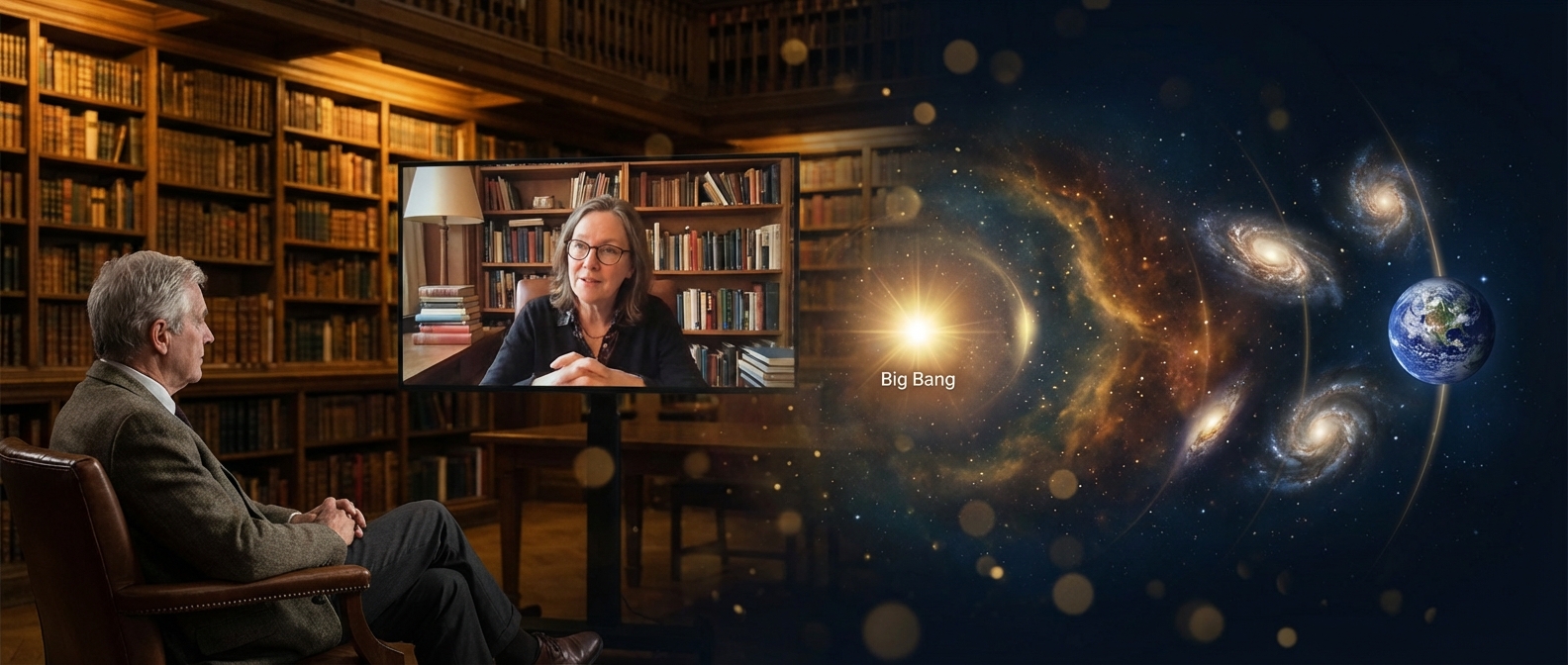
In 2020, while directing the "FinTech Thought Leaders" lecture series at the Zhejiang University International Business School (ZIBS), I engaged in an in-depth dialogue with Professor Mauro Guillen — then at the Wharton School and later appointed Dean of Cambridge Judge Business School — about his book 2030: How Today's Biggest Trends Will Collide and Reshape the Future of Everything.[1] Five years have passed, and less than five years remain until 2030. This is an opportune moment to revisit those predictions: Which have been validated by reality? Which were overturned by unexpected variables? And what entirely new forces are reshaping the landscape of 2030?
I. Revisiting Guillen's Core Predictive Framework
In our 2020 conversation, Professor Guillen proposed an ambitious analytical framework: he argued that between now and 2030, three sets of structural trends would simultaneously collide — demographic transformation (global aging and youth bulges in emerging markets), the eastward shift of economic gravity (the rise of Asia's and Africa's middle classes), and technological disruption (the deepening of digitization, automation, and platform economies). He likened this multi-trend collision to the Industrial Revolution of the 18th century, considering it a once-in-two-or-three-centuries historic structural transformation.[1]
During the conversation, Guillen also offered several specific predictions: first, the population aged 60 and above would become the world's largest consumer group before 2030; second, remote work would shift from an emergency measure to a new normal, giving rise to a genuine "global talent market"; third, the sharing economy would accelerate under environmental pressures; fourth, digital currencies would rewrite the rules of the global monetary system; and fifth, globalization would not reverse entirely but would undergo a "selective reconfiguration."
Particularly noteworthy was his framing of COVID-19. Professor Guillen did not see the pandemic as creating new trends, but rather as a "Great Accelerator" — it intensified structural changes already underway, bringing forward a future originally expected to arrive only by 2030.[2]
With this predictive framework in mind, let us examine the actual developments of the past five years, one by one.
II. Validated Predictions: Remote Work, the Silver Economy, and Emerging Markets
One of Professor Guillen's most accurate predictions concerned the normalization of remote work. When we spoke in 2020, the world was in the early chaos of the pandemic, and most people viewed working from home as a temporary emergency measure. Yet Guillen explicitly predicted that remote work would permanently alter the underlying structure of employment patterns. Five years later, this judgment has been fully validated. According to McKinsey research, approximately 35% of knowledge workers globally maintained some form of hybrid work arrangement in 2025.[3] More importantly, as Guillen foresaw, a genuine "global talent market" is taking shape — transaction volumes on cross-border remote hiring platforms have grown by over 400% in the past five years, as companies increasingly embrace hiring team members in different countries.
The silver economy prediction was likewise validated by reality. Guillen memorably described the commercial value of aging populations with the phrase "Gray is the new black." Over the past five years, from Japan to Europe to China, the silver economy has evolved from a marginal concept to a mainstream business strategy. According to a World Economic Forum report, the global "longevity economy" exceeded $22 trillion in 2024.[4] Tech giants have also finally begun addressing the needs of older users — Apple's health monitoring features, Google's accessibility design, and fintech companies' simplified interface designs all reflect the deepening of this trend.
The rise of emerging market middle classes has also largely followed the trajectory Guillen predicted — albeit at a pace slightly slower than his optimistic estimates. India surpassed China as the world's most populous country in 2023, and its digital payment ecosystem (centered on UPI) has achieved remarkable results in financial inclusion. Southeast Asia's digital economy continues to expand. Mobile Money users in Africa have surpassed 800 million.[5] These developments confirm Guillen's core thesis: the center of gravity of the global economy is indeed continuing to shift eastward and southward.
III. The Unexpected: The AI Revolution, Geopolitical Fractures, and Climate Urgency
However, the past five years have also brought several major variables that Professor Guillen's 2020 framework failed to fully anticipate.
The first, and most significant surprise, was the explosion of generative AI. The release of ChatGPT in November 2022 triggered a technological revolution comparable to the birth of the internet. In our 2020 conversation, Guillen discussed trends in automation and digitization, but the speed and scope of generative AI's emergence far exceeded anyone's expectations. Goldman Sachs research estimates that generative AI could affect approximately 300 million full-time jobs globally;[6] and AI's penetration into education, healthcare, law, and creative industries is accelerating on a monthly basis. This variable has not only changed the substance of the "technological disruption" pillar in Guillen's framework, but may fundamentally redefine the very concepts of "work" and "learning."
The second surprise was the intensification of geopolitical fractures. Professor Guillen foresaw a "selective reversal" of globalization in 2020, but he likely underestimated the intensity of geopolitical conflict. The outbreak of the Russia-Ukraine war, the deepening of US-China tech decoupling, and the trend toward "friend-shoring" in global supply chains have made the trajectory of globalization far more complex than Guillen's framework assumed. The World Trade Organization warned in its 2024 report that global trade is experiencing "fragmentation" rather than "deglobalization" — trade has not shrunk, but is being reconfigured along geopolitical fault lines.[7]
The third underestimated factor was the urgency of climate change. In our 2020 conversation, Professor Guillen mentioned the importance of the sharing economy for resource sustainability, but the speed at which climate issues escalated from a "future challenge" to an "immediate crisis" over the past five years surpassed most forecasters' imagination. The frequency and intensity of extreme weather events globally have continued to rise, the EU's Carbon Border Adjustment Mechanism (CBAM) is reshaping international trade rules, and the "green transition" has shifted from a moral appeal to a hard business compliance requirement.[8]
What these three unexpected variables share is that they do not negate Guillen's framework — they add to its complexity. Guillen's "triple collision" model needs to be expanded into a more complex multi-dimensional matrix — beyond demographics, economics, and technology, it must now incorporate geopolitics and climate as two additional dimensions.
IV. An Updated 2030 Outlook: The Five-Year Countdown
Less than five years remain until 2030. Based on revisions to Guillen's framework and the incorporation of new variables from the past five years, I attempt to propose an updated 2030 outlook.
Outlook One: AI will become the core engine of economic growth, but the pace of social adaptation will severely lag behind technological progress. By 2030, generative AI and its subsequent iterations will be deeply embedded in virtually all knowledge-intensive industries. PwC estimates that AI will contribute approximately $15.7 trillion to global GDP by 2030.[9] However, the pace of workforce transformation will fall far behind the speed of technology deployment, creating massive skills mismatches and structural unemployment. This will be one of the thorniest policy challenges governments face before 2030.
Outlook Two: The global economy will form a "tripolar" structure. A US-led technology ecosystem, a China-led manufacturing and digital payment ecosystem, and an EU-led regulatory and standards framework will form a dynamic equilibrium between competition and cooperation. Emerging market nations — especially India, Indonesia, and Brazil — will strategically navigate between the three poles, seeking to maximize their own interests. The eastward shift of economic gravity that Guillen predicted continues, but the path has become more tortuous and fraught with uncertainty.
Outlook Three: The digital currency landscape will exceed Guillen's predictions. In our 2020 conversation, Professor Guillen correctly predicted the rise of central bank digital currencies (CBDCs) and the de-speculation of cryptocurrencies. But what he failed to foresee was the comprehensive expansion of "tokenization" — from real estate to art to carbon emission credits, virtually every asset class is experiencing a wave of tokenization. According to Boston Consulting Group projections, the global market for tokenized assets could reach $16 trillion by 2030.[10]
Outlook Four: "Lifelong learning" will shift from a slogan to a survival necessity. Professor Guillen called for abandoning the three-stage life model of "learn — work — retire." In the age of AI, this call has become even more urgent. By 2030, I expect all major global economies to have established some form of "national lifelong learning account," where governments, businesses, and individuals jointly invest resources in continuous skill upgrading. For higher education institutions — including internationally-oriented business schools like ZIBS — this represents both enormous transformation pressures and opportunities.
Outlook Five: The convergence of climate and technology will give birth to entirely new industrial ecosystems. From carbon capture technology to climate finance instruments to green supply chain management, "Climate Tech" will become one of the world's largest emerging industry categories before 2030. This trend will profoundly reshape the operational logic of traditional sectors such as finance, energy, manufacturing, and agriculture.
V. Implications for Strategists
Re-examining Professor Guillen's 2030 predictions, perhaps the most important insight lies not in which predictions were right or wrong, but in a deeper methodological question: how should we conduct strategic future thinking in highly uncertain environments?
First, embrace "Scenario Planning" rather than "Trend Extrapolation." The reason Guillen's predictive framework has largely withstood the test of time is that he identified structural forces rather than specific events. However, the explosion of generative AI and the sharp deterioration of geopolitics remind us that the impact of black swan events can overwhelm any structural trend. The scenario planning method pioneered by Shell in the 1970s — not predicting one future, but preparing for multiple possible futures — is more important today than ever before.[11]
Second, cultivate "Ambidexterity." Facing the multiple challenges of 2030, both companies and nations need to simultaneously possess two seemingly contradictory capabilities: on one hand, "exploitation" — maximizing efficiency and performance within existing frameworks; on the other, "exploration" — preparing for fundamental environmental change. In my practice at Meta Intelligence, I consistently witness that the most successful organizations are those that find a dynamic balance between "excelling in the present" and "preparing for the future."
Third, "cross-domain thinking" is the key capability for understanding the future. Guillen's greatest contribution lies in teaching us to view trends through the lens of "collision" rather than "isolation." The AI revolution cannot be understood apart from population aging (Who will care for the elderly? What are the ethics of AI caregiving robots?); climate change cannot be analyzed apart from geopolitics (Who bears the costs of the green transition? How do carbon tariffs reshape the global trade landscape?). Cultivating this capacity for cross-domain thinking is a core competency I have consistently emphasized in my research at Cambridge and my teaching at ZIBS.
Fourth, redefine "Resilience." The successive shocks of the past five years — the pandemic, geopolitical conflicts, supply chain disruptions, AI disruption — have transformed "resilience" from an academic concept into a survival necessity. But true resilience is not about "bouncing back" to the original state — it is about "bouncing forward." What companies and policymakers need to build is not rigid armor to withstand shocks, but organizational mechanisms capable of learning and evolving through disruption.
When I wrote the foreword for the Chinese edition of Professor Guillen's 2030 in 2020, I stated: the best way to understand the future is not to predict it, but to prepare for it. Revisiting this statement five years later, I remain deeply convinced. Guillen's framework provides us with an excellent tool for understanding structural forces, while the surprises of the past five years remind us to remain humble — in the currents of history, the best strategy is not to try to control the direction, but to ensure we have sufficient capability to navigate in any direction.
References
- Guillen, M. F. (2020). 2030: How Today's Biggest Trends Will Collide and Reshape the Future of Everything. St. Martin's Press.
- Guillen, M. F. (2020). The Great Acceleration: How COVID-19 Is Fast-Forwarding the Future. Knowledge@Wharton. knowledge.wharton.upenn.edu
- McKinsey Global Institute. (2023). The State of Remote Work 2023. mckinsey.com
- World Economic Forum. (2024). The Longevity Economy: Opportunities in an Ageing World. weforum.org
- GSMA. (2024). State of the Industry Report on Mobile Money 2024. gsma.com
- Goldman Sachs. (2023). The Potentially Large Effects of Artificial Intelligence on Economic Growth. goldmansachs.com
- World Trade Organization. (2024). World Trade Report 2024: Trade and Fragmentation. wto.org
- European Commission. (2023). Carbon Border Adjustment Mechanism (CBAM). ec.europa.eu
- PwC. (2024). Global Artificial Intelligence Study: Sizing the Prize. pwc.com
- Boston Consulting Group. (2023). Relevance of On-Chain Asset Tokenization in 'Crypto Winter'. bcg.com
- Schwartz, P. (1996). The Art of the Long View: Planning for the Future in an Uncertain World. Currency Doubleday.